THE DOLLSTATIC WORLD / STYLE JOURNAL
Hoop Earring Size Guide: Diameter, Drop and Real Examples

Choose hoop earring size by comparing the same measurement: inner diameter with inner diameter, and overall length with overall length. A 40mm opening and a 31mm-long charm earring describe different parts of the design. Start with a pair you already enjoy wearing, measure it, then check the new listing’s opening, outline and fastening before choosing.
This hoop earring size guide explains the numbers with three current DollStatic examples. The aim is to help you choose the amount of visible circle or hanging detail you want, without treating a size name as a fit guarantee. Clothing combinations below are editorial suggestions.
Read the measurement label before the size number
Look for the word beside the number. These measurements answer different questions:
- Inner diameter: the straight distance across the empty opening of a circular hoop, from inside edge to inside edge.
- Outer diameter: the straight distance across the outside of the hoop’s circular body, including the metal on both sides.
- Overall length and width: dimensions of the whole earring as the seller measures it. Hanging hearts, stars or other decorations may be included; they do not describe the hoop opening.
- Wearing drop: the distance from the attachment point to the lowest hanging detail. Do not assume a listing’s total length uses that same starting point.
- Body thickness and post thickness: separate dimensions. The visible hoop can be broad while the part passing through the piercing is much thinner.
If a page only says “20mm,” ask whether that is an inside or outside measurement. If it says “length,” keep that label when comparing it. The QxH product measurement guide, for example, describes earring measurements as length, width and height as applicable; a diameter is not the only possible specification.
Convert millimeters, centimeters and inches
One centimeter equals 10 millimeters. To convert millimeters to inches, divide by 25.4: NIST defines one inch as exactly 25.4mm. The inch values below are rounded to two decimal places.
| Millimeters | Centimeters | Approximate inches |
|---|---|---|
| 10mm | 1cm | 0.39in |
| 15mm | 1.5cm | 0.59in |
| 20mm | 2cm | 0.79in |
| 25mm | 2.5cm | 0.98in |
| 30mm | 3cm | 1.18in |
| 36mm | 3.6cm | 1.42in |
| 40mm | 4cm | 1.57in |
| 50mm | 5cm | 1.97in |
A 30mm inner diameter becomes a 3cm inner diameter after conversion. It does not become the earring’s full length. Names such as small, medium, large and huggie are useful browsing labels, but the written dimensions give you a clearer comparison.
Compare three actual hoop listings
These designs show why the measurement label matters as much as the number. The table presents separate products, not a suggested bundle.
| Product | Listed material | Listed measurements | Price |
|---|---|---|---|
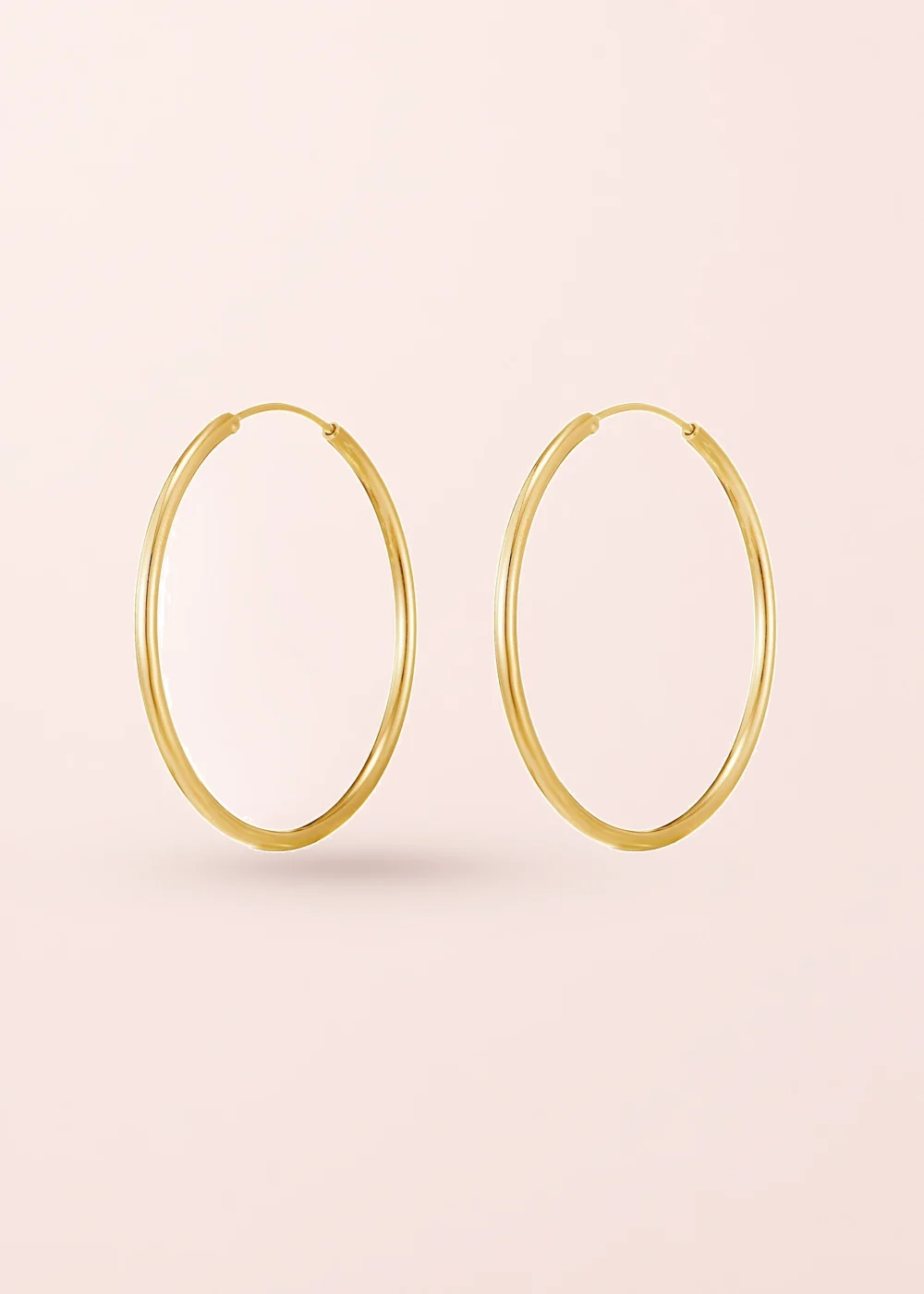
| Mirabel Large Hoop Earrings | Stainless steel | Inner diameter 4cm | $18.00 |
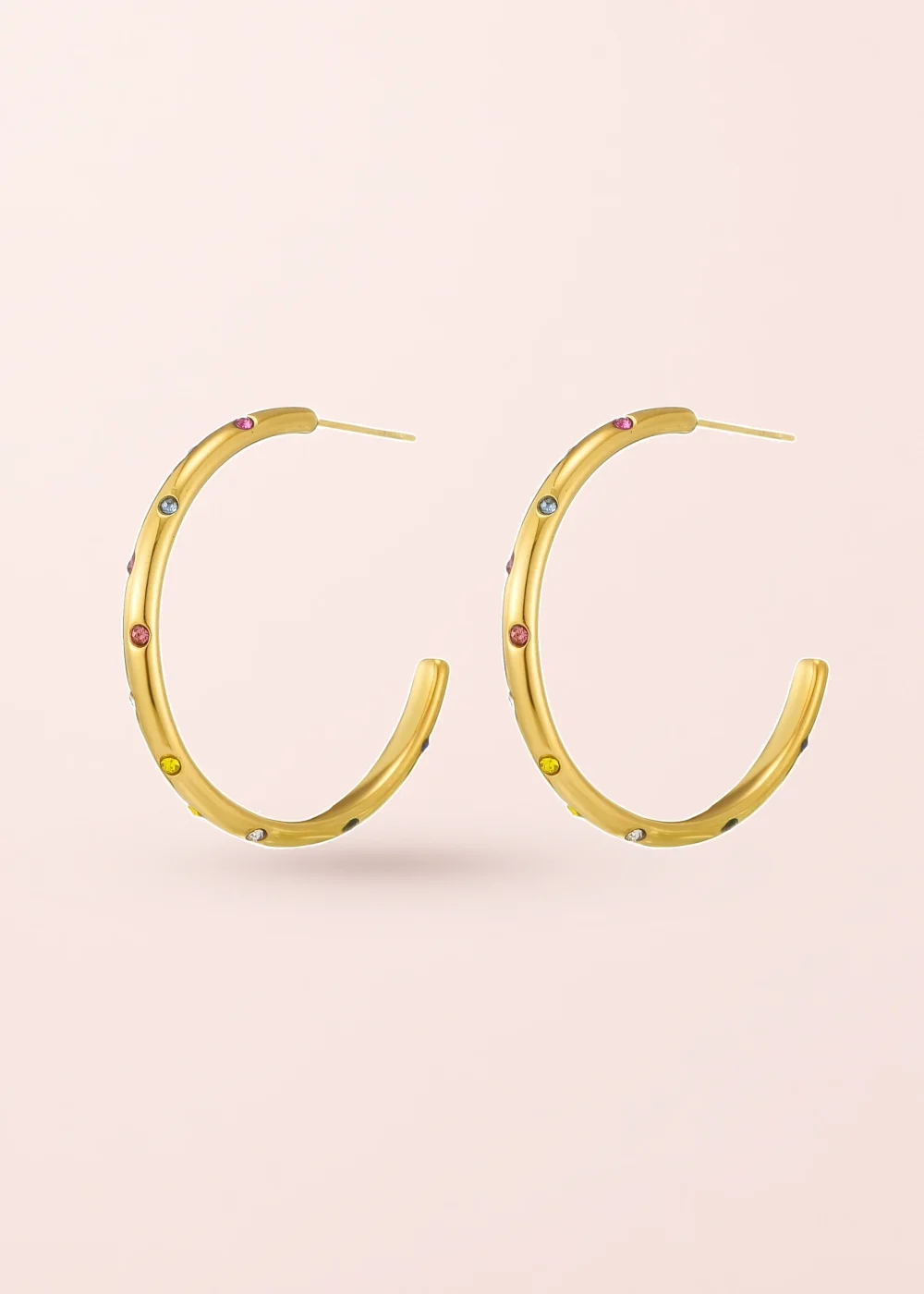
| Maya Large Hoop Golden Earrings | Stainless steel with colored stone | Inner diameter 3.6cm | $26.00 |
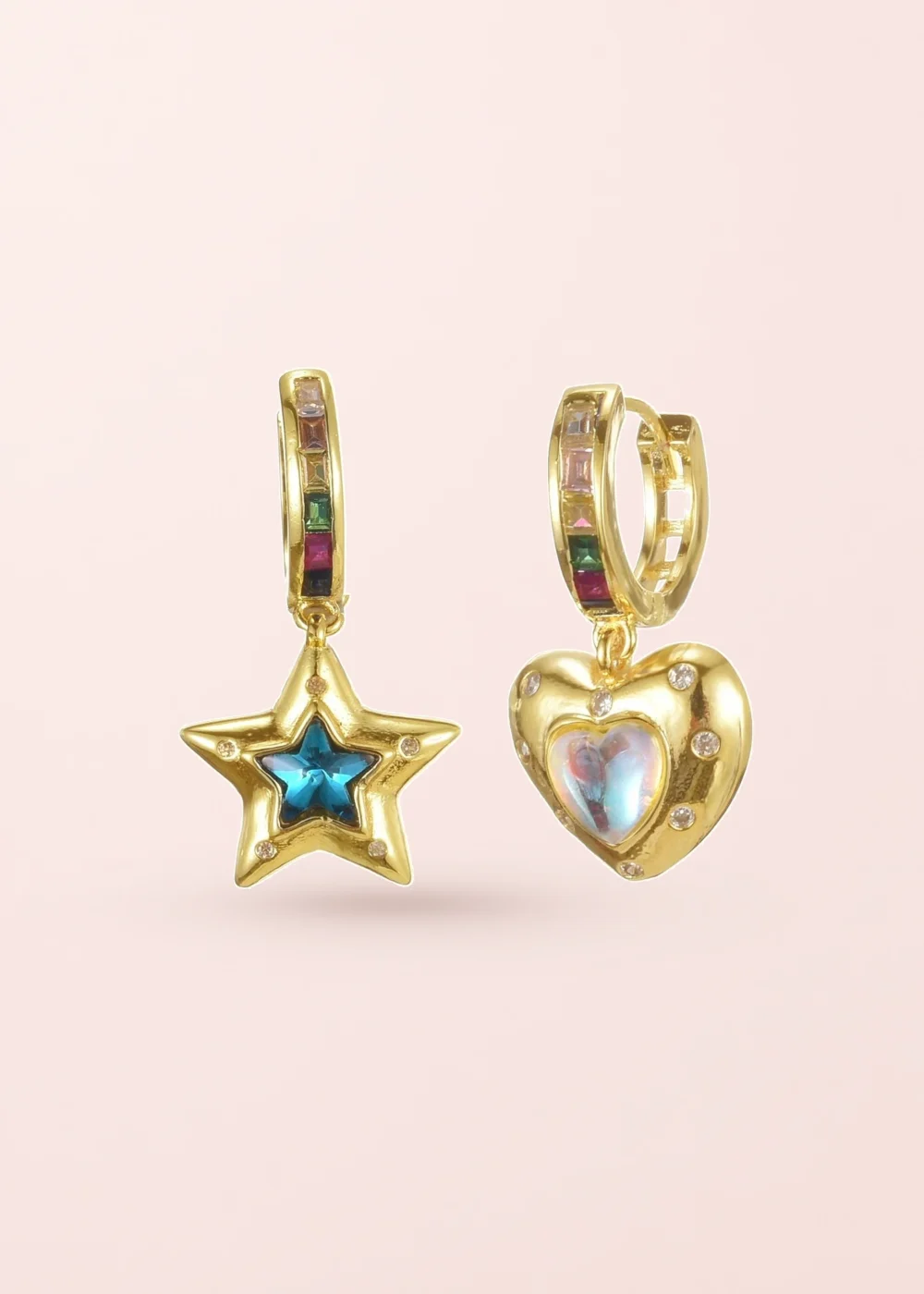
| Judy Heart and Star Huggies | Brass with zirconia stones | length 3.1cm, width 1.6cm | $26.00 |
Prices are in USD. Shipping, tax and coupons are excluded. Check the linked product pages for current options and availability.
Mirabel: a plain circle with a 40mm inner diameter
Mirabel Large Hoop Earrings lists stainless steel and an inner diameter of 4cm, equivalent to 40mm. Its photograph shows a plain, slender, golden-looking circular design with a small fastening at the top. The stated opening is useful if you want to compare it with the inside of a hoop you own.
Maya: a 36mm opening with color along the hoop
Maya Large Hoop Golden Earrings lists stainless steel with colored stone and an inner diameter of 3.6cm, or 36mm. The photograph shows an open circle with a projecting post and small colored accents along the golden-looking front. Its listed opening is 4mm smaller than Mirabel’s; the design also changes from a plain line to a dotted color detail.
That comparison supports a choice between two outlines. It does not establish which weighs less or how either fastening will feel on your ear. Golden describes the appearance and listed option; the supplied material is stainless steel, not solid gold.
Judy: hanging motifs, with length and width listed
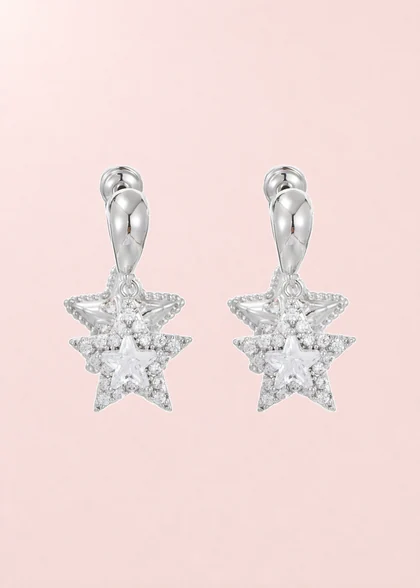
Judy Heart and Star Huggies lists brass with zirconia stones, length 3.1cm and width 1.6cm, and one pair containing two earrings. The photograph shows small stone-set hoops with a hanging star on one and a heart on the other.
Converting the listing gives 31mm length and 16mm width. Neither number is labeled inner diameter. You cannot use them to decide whether Judy has more opening space than another huggie. Its hanging shapes also mean that “huggie” does not describe the total visible outline by itself. The listing does not mark measurement endpoints or give separate charm lengths. Ask for the hoop’s inner dimensions if that determines your choice.
Measure a pair you already like
Use a familiar pair as your reference instead of choosing an arbitrary “ideal” size. For a closed circular hoop:
- Lay the earring flat beside a millimeter ruler, without bending it.
- Measure straight across the center of the opening, from one inside edge to the other. Record this as inner diameter.
- Measure across the outside of the circular body and record that separately. Note any fastening or decoration that projects beyond it.
- If there is a charm, record the whole design’s top-to-bottom length as well. Keep your measurement endpoints in the note.
- Compare each value only with the same labeled dimension on the new product.
For an oval or irregular shape, record the opening’s height and width separately rather than forcing it into a single circular diameter. A photograph can help you identify the parts, but equally sized product thumbnails do not mean equally sized earrings.
If you do not own hoops, draw a few measured circles on paper to compare their visible scale beside your face. A circle representing a 40mm inner diameter shows only the empty opening; it leaves out the metal, post and fastening. Use it to narrow your visual preference, then check the actual product specifications.
Choose the outline with your everyday clothes
Try your existing earrings with the clothes and hairstyle you actually repeat. These outfit combinations are editorial suggestions:
- For a plain hoop: an ivory crew-neck tee, navy trousers and an open pale-blue shirt give a golden-looking circle a quiet background. Tuck hair behind the ears for the first comparison. Start without a pendant so you can judge whether the circle alone gives you enough detail.
- For colored accents: a black scoop-neck top and dark denim let the small colors on a Maya-style hoop supply the contrast. Leave out a multicolored necklace initially; repeating every stone color in your clothes can make it harder to see the hoop’s line.
- For a hanging heart and star: a plain cream knit and blue jeans let the two motifs be the focal point. Keep a scarf or raised collar away from the hanging details while comparing the look. If you prefer an asymmetrical pairing, our mismatched earrings guide addresses that separate styling decision.
Then put your hair back as you normally wear it and turn your head beside the collar. If you use over-ear headphones, check your familiar pair with those too. Notice contact or pressure rather than assuming a smaller diameter solves it. You may prefer a different outfit, a different outline or to keep earrings you already know suit that routine.
Check the missing fit details before ordering
None of these three listings separately supplies weight per earring, post thickness or usable post length. Judy’s inner opening is also unlisted. Those omissions matter if you need a particular clearance or want to compare a known comfortable pair. A thin-looking hoop is not a weight measurement, and a material name alone does not specify every fastening component.
Ask a focused question through Contact: “For the exact product name and option, what is the inner opening, post thickness and usable post length? What does one earring weigh, and how does the closure fasten?” Add your own required dimension if you have one. If a necessary detail cannot be confirmed, keep it unresolved when deciding; do not substitute a guess from the image.
Make the decision without buying a whole ear stack
Choose the visible shape first, compare the matching dimension second, then resolve the fit information you need. Mirabel and Maya let you compare two explicitly labeled inner diameters. Judy needs a separate opening measurement before making that same comparison. You can enjoy a plain circle or a playful heart-and-star detail without adding extra piercings or several new pairs.
If a pair you own already gives you the outline and everyday clearance you want, keep using it. If you want another option, browse Y2K earrings and open the individual listing for its current facts. Read Shipping & Delivery and the return process before ordering.
Product specifications reviewed 10 November 2026. The comparison table reads current catalog data when the page is generated; product options and availability belong on the linked listings.